

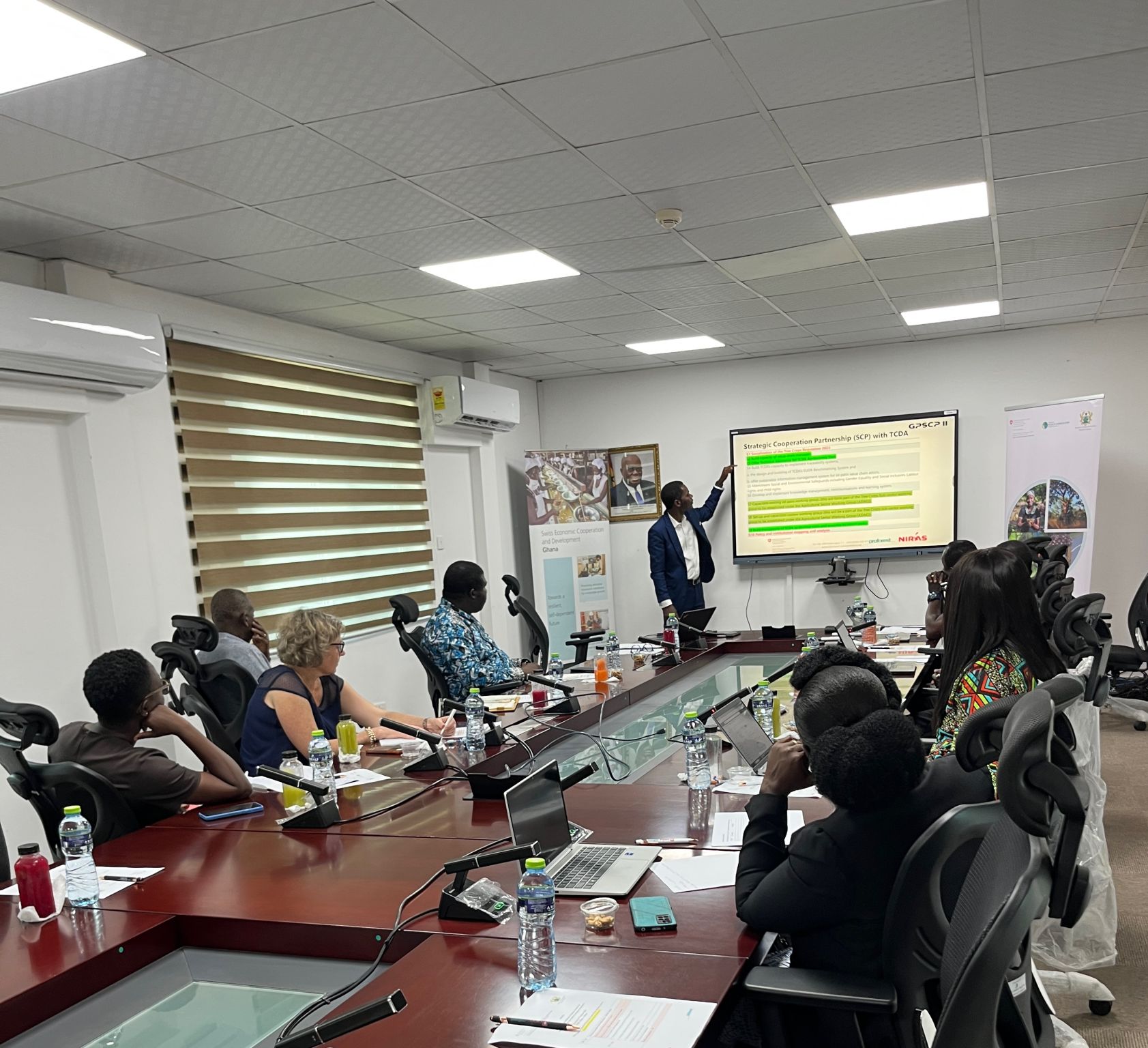
In a decisive move toward strengthening Ghana’s agricultural competitiveness, stakeholders convened today in Accra for the Second Program Steering Committee Meeting of the Ghana Private Sector Competitiveness Programme II (GPSCP II). The gathering marked a pivotal moment in the country’s effort to drive sustainable growth in the cashew and oil palm value chains.
The meeting, chaired by Dr. Solomon Gyan Ansah, Director of Crop Services at Ghana’s Ministry of Food and Agriculture, provided a platform to review the program’s implementation strategy, share key progress updates, and map out the path forward.
“Today’s meeting underscores our collective commitment to building a more competitive and resilient agricultural sector,” Dr. Ansah stated in his opening remarks. “By strengthening the cashew and oil palm value chains, we not only enhance trade performance but also improve livelihoods and foster inclusive economic development.”
Launched in January 2024, GPSCP II is a bilateral initiative supported by the Government of Ghana and Switzerland’s State Secretariat for Economic Affairs (SECO). It is jointly implemented by NIRAS and Proforest, with a mission to build a vibrant, environmentally sustainable, and socially inclusive agribusiness landscape in Ghana.
The Programme team presented several significant milestones achieved since the inaugural committee meeting, including the launch of a grant facility supporting women-led and processing-focused SMEs in the tree crop sector. The updates demonstrated how the program is tangibly contributing to enhancing private sector competitiveness and value addition across both industries.
Participants at the meeting including representatives from the Ministry of Trade and Industry, the Tree Crops Development Authority, SECO, NIRAS, Proforest, and other sector stakeholders engaged in collaborative discussions, offering expert insights and actionable recommendations.
The committee emphasized the importance of maintaining alignment between field-level realities and national development priorities. Key topics included promoting climate-resilient agricultural practices, supporting gender equity in agribusiness, and deepening partnerships with the private sector.
GPSCP II’s multi-stakeholder steering committee structure ensures that the voices of public institutions, private actors, and development partners are heard throughout the program’s implementation. Today’s session reaffirmed the importance of coordinated, data-driven, and inclusive approaches to ensure long-term impact.
As Ghana continues its push to transform agriculture into a powerful engine for growth, meetings like these provide not only strategic guidance but also a renewed sense of shared purpose.
Leave a Reply
You must be logged in to post a comment.